
Wolfram Eilenberger, Time of the Magicians: The Invention of Modern Thought 1919-1929 – Allen Lane, August 2020
Wolfram Eilenberger, Time of the Magicians: The Invention of Modern Thought 1919-1929 – Allen Lane, August 2020
OK

Wolfram Eilenberger, Time of the Magicians: The Invention of Modern Thought 1919-1929 – Allen Lane, August 2020
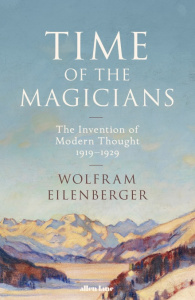
The year is 1919. Walter Benjamin flees his overbearing father to scrape a living as a critic. Ludwig Wittgenstein, scion of one of Europe’s wealthiest families, signs away his inheritance, seeking spiritual clarity. Martin Heidegger renounces his faith and aligns his fortunes with Husserl’s phenomenological school. Ernst Cassirer sketches a new schema of human culture on a cramped Berlin tram. The stage is set for a great intellectual drama. Over the next decade the lives and thought of this quartet will converge and intertwine, as each gains world-historical significance, between them remaking philosophy.
Time of the Magicians brings to life this miraculous burst of intellectual creativity, unparalleled in philosophy’s history, and with it an entire era, from post-war exuberance to economic crisis and the emergence of National Socialism. With great art, Wolfram Eilenberger…
View original post 109 more words
New Heidegger Research – book series
OK
Call for proposals for a new book series with Rowman International.
New Heidegger Research publishes work by, about, and provoked by Martin Heidegger. The goal of the series is to promote informed and critical dialogue that breaks new philosophical ground by taking into account the full range of Heidegger’s thought as well as the enduring questions raised by his work. To this end, the series includes English translations of newly available and untranslated texts by Heidegger himself, as well as monographs and anthologies that come to grips with Heidegger’s thought or draw inspiration from it. While insisting on rigorous textual scholarship, the series will give pride of place to work that does not limit itself to explaining Heidegger, but moves Heideggerian questions in new directions and opens new lines of research in dialogue with Heidegger’s thought. As Heidegger wrote in his preface to his collected writings, “The point is…
View original post 334 more words
 Monitor berdyczowski - Berdichev Heraldry Inquirer