
Moskovsky prospect in Leningrad (1972)
Monitor berdyczowski – Berdichev Heraldry Inquirer
subject autonomy, citizens vs subjects, republican virtues, freedom, CEE, Poland, modernisation, Polish People Republic, Republic of Poland, Roman-catholic Church, European Union, post-catholicism, post-communism, liberalism, ordo-liberalism

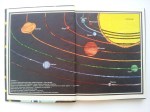
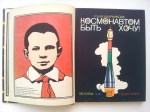

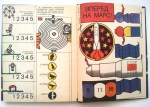

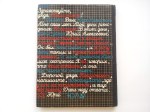
“I Want to Be a Cosmonaut”,vintage Soviet book from 1983
On Etsy: http://ift.tt/2hj6Xhf
Stravinsky – L’Histoire du Soldat
This is an…interesting work, to say the least. Part ballet, part spoken melodrama, it is a setting of a Russian folktale. The story follows a soldier who is tricked by the devil to sell his fiddle for three years of his life, and a book that can tell the future. After he finds out he’s been cheated out of time, the devil encourages him to use the book to gain a fortune. Which he does, but no amount of money can bring back the joy he had in life with his family and friends, who are all convinced he’s died. He comes across the devil, and buys back his old fiddle, only to find he’s forgotten how to play. He tears up the book, and now he has no family, no wealth, and no joy. He later learns that a nearby princess is looking for a man to marry. When he gets to the castle to offer for her hand, he finds the devil has disguised himself as a great fiddle player. The narrator tells the soldier that the devil still has his hold on him because he still has the devil’s money. So the soldier challenges the devil to a card game, and loses, and the devil is happy at first until he realizes the soldier is the real winner now that he is free of the devil’s grasp. Now that he has his violin skills back, the soldier wards off the devil by challenging him to a violin contest and playing better and more aggressively than the devil could even try. He marries the princess. But it isn’t a happy ending, because the devil promises that if the soldier ever leaves the castle, then the devil will take his soul again. He lives with the princess, but still misses his first girlfriend, and his mother, since he was taken away from both at the beginning of this mess. He is tricked by this temptation to leave the castle, and the devil wins. The moral is that the soldier’s downfall has everything to do with his greed, the inability to satisfy the desire to have more. Musically, the work is pretty intense. Bitonality, chamber orchestration, and time signatures that seem to change with each bar…it has every Stravinsky-ism one could wish for. Personally, I wish this tale had less…”tale”, but the suite feels a bit empty without the voices rhythmically telling the story over the music. Like anything by Stravinsky, it’s a bit of a shock on the ears, something that is a good hundred years old yet sounds as fresh as ever.
Stravinsky – Three Japanese Lyrics (1913)
In different books or lectures about 20th century music, you’ll often see Schoenberg and Stravinsky pitted against each other as dominating forces. Which direction will music go? Schoenberg’s 12 tone expressionism, or Stravinsky’s polytonal/polyrhythmic irony? In my opinion, Stravinsky “won” but that’s beside the point. I think it’s a bit silly to push the outcome of musical ethos onto any one person’s shoulder. And besides, why can’t we love both composers? Here, Stravinsky takes after Schoenberg’s influence, early on in his career during the so called “Russian” period. Even so, this set of music is following the “Japanoise” trend in Europe at the time. A form of Orientalism/Exoticism, this time focused on Japan. And Stravinsky, the ever-stylish cosmopolitain, couldn’t avoid brushing with Japanoise trends in his own music. The year before, Stravinsky came upon the lyrics of some Japanese songs and poetry, and said “The impression which they made on me was exactly like that made by Japanese paintings and engravings. The graphic solution of problems of perspective and space shown by their art incited me to find something analogous in music.” And so he started writing these scene-songs. As he was working with Diaghilev on putting together the Firebird and Petrushka, he attended a performance of Schoenberg’s Pierrot Lunaire [conducted by Schoenberg himself], and though he already wrote teh first song, decided to incorporate the same kind of instrumental textures in the second and third songs. And overall this is another example of Stravinsky turning to folk music and treating music with less “subjective” and “academic” views, as the Romantics did. The set is used to transition from winter to spring. The first song opens with a rocking melody in the flute and clarinet. Soon the whole ensemble comes in with rocking, quick staccato, almost pointilist notes. The second song opens with a quick chord and run down the piano, as the instruments play in a quiet frenzy, like something nocturnal, insects running around. The third song slows us down a bit, with thin textures the soprano sings over delicate glass lines of individual instruments. The music ends in this thin texture, drifting away.
Songs:
1. Akahito
2. Mazatsumi
3. Tsaraïuki
Soprano: Susan Naricki
Chamber Ensemble: Twentieth Century Classics Ensemble
Conductor: Robert Craft
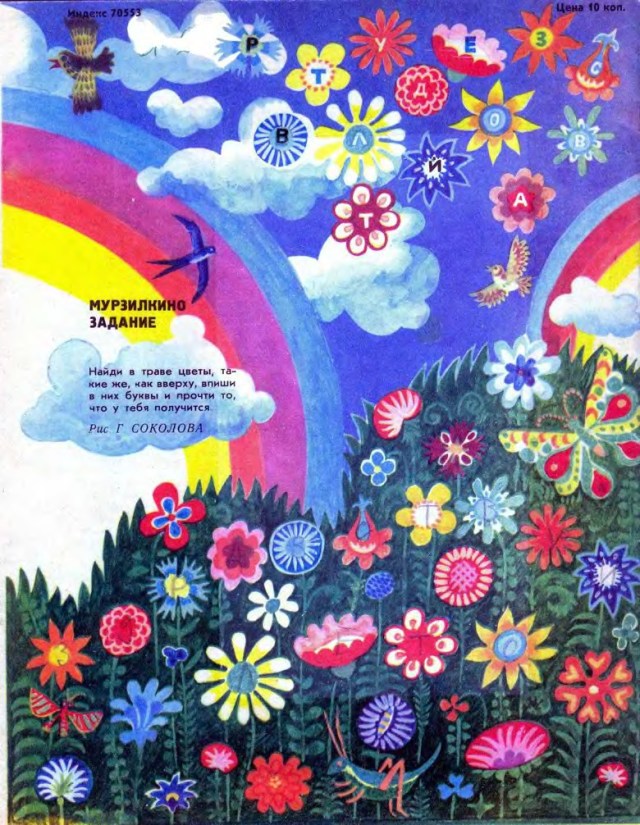
Find the same flowers in the grass as those in the sky. Write in corresponding letters and read the result.
Illustration by G. Sokolov, published in Murzilka in July 1978.
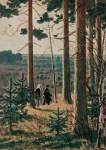

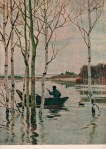
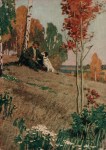
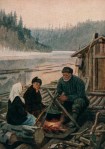
Illustrations for Mikhail Prishvin’s short stories by F. Glebov (postcards from 1956)



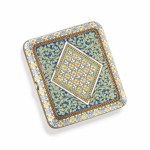
Enamel cigarette cases designed at Pavel Ovchinnikov’s manufactory (Russia, end of 19th cent.)






 Monitor berdyczowski - Berdichev Heraldry Inquirer